Guide · General
Best Food Tracking App for Weight Loss: 7 Tools Compared
Compare the best food tracking app for weight loss on logging, ease of use, nutrition depth, privacy and price, with sourced 2026 pricing.
By the KeenVerdict research desk · Updated November 7, 2026 · 13 min read
The best food tracking app for weight loss is the one you will still open in week six, and a 2023 study summarized by ScienceDaily backs that up: logging food on roughly 40% of days was associated with average weight losses exceeding 5% in a commercial weight-loss program. Consistency beats completeness.
For a simple calorie budget, Lose It! is the starting choice. MyFitnessPal suits broader everyday logging, and neither requires a subscription for core food entry. Cronometer and MyNetDiary fit nutrient-focused logging, while MacroFactor offers adaptive targets but has no permanent free tier. Noom and WeightWatchers sell guided programs rather than standalone food diaries, so their subscriptions need to justify more than meal entry.
KeenVerdict weights features at 40%, ease of use at 30%, and value at 30%. Applied here, that means judging logging capabilities, everyday effort, and what remains useful without upgrading. Popularity does not decide the order.
Match the tracker to your logging habit, budget, and desired nutrition detail. Free core logging, nutrient depth, adaptive targets, and guided programs each pull toward a different app. Confirm current prices on the vendor's site before subscribing.
Table of Contents
- 1. MyNetDiary
- 2. Lose It!
- 3. Cronometer
- 4. MacroFactor
- 5. MyFitnessPal
- 6. Noom
- 7. WeightWatchers
- How the seven food tracking apps compare on free access, paid entry price and best use
- Choose the Tracker That Fits Your Logging Habit
1. MyNetDiary
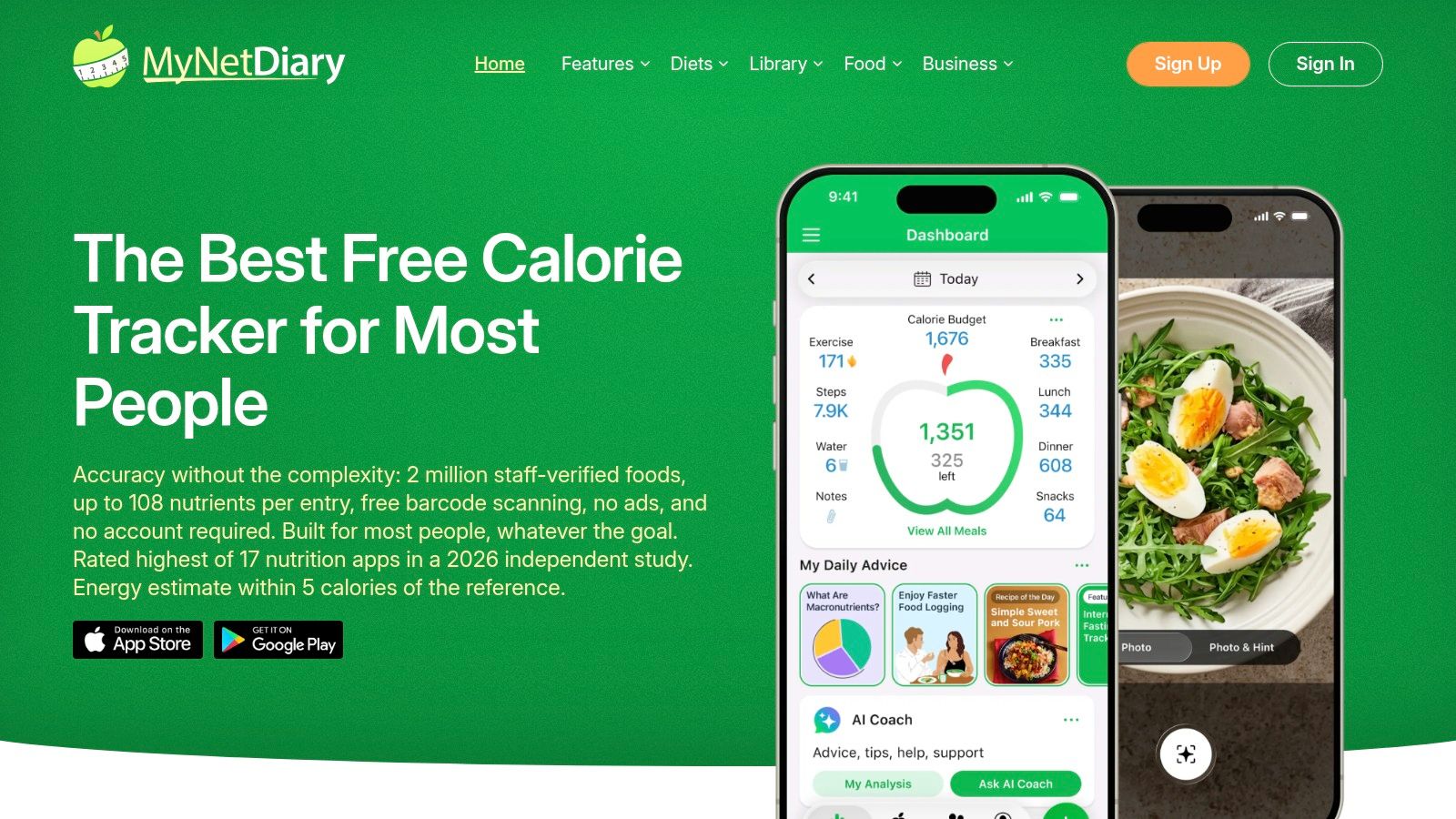
Best for free logging with room to explore nutrition. MyNetDiary combines a personalized calorie budget with food, weight, activity, and nutrient tracking. It suits someone who wants a conventional food diary today but might want more nutritional detail later.
The free tier includes calorie, macro, and nutrient tracking, supported by a verified food database. Custom foods, meals, and recipes make it practical for someone who regularly cooks rather than relying entirely on packaged-food searches.
That combination matters when a household repeats meals. A saved breakfast or homemade soup should become a reusable entry, not another ingredient-by-ingredient task whenever it appears on the menu.
Where the paid plans fit
Premium adds meal plans and additional tracking tools. Premium Plus adds AI Coach, conversational voice logging, and meal suggestions, while a lifetime Premium option offers an alternative to recurring payments.
- Choose free first: Core food logging provides a reasonable starting point without an upfront subscription.
- Consider Premium for planning: Meal plans matter when deciding what to eat creates more difficulty than recording it.
- Consider Premium Plus for input convenience: Voice logging deserves attention when typing meals is the reason entries get skipped.
The trade-off is complexity. Extensive nutrient information can distract someone who only wants a daily calorie total. A practical setup keeps the calorie budget and commonly used nutrients prominent instead of treating every available field as a daily assignment.
Under the weighted comparison, MyNetDiary's strongest argument is free functionality. Paid features should solve a specific problem, such as meal planning or cumbersome entry, rather than serve as a prerequisite for starting.
Plan status: Free, Premium, Premium Plus, and lifetime Premium. Current vendor prices and billing terms need confirmation; no dated live quote is available.
2. Lose It!
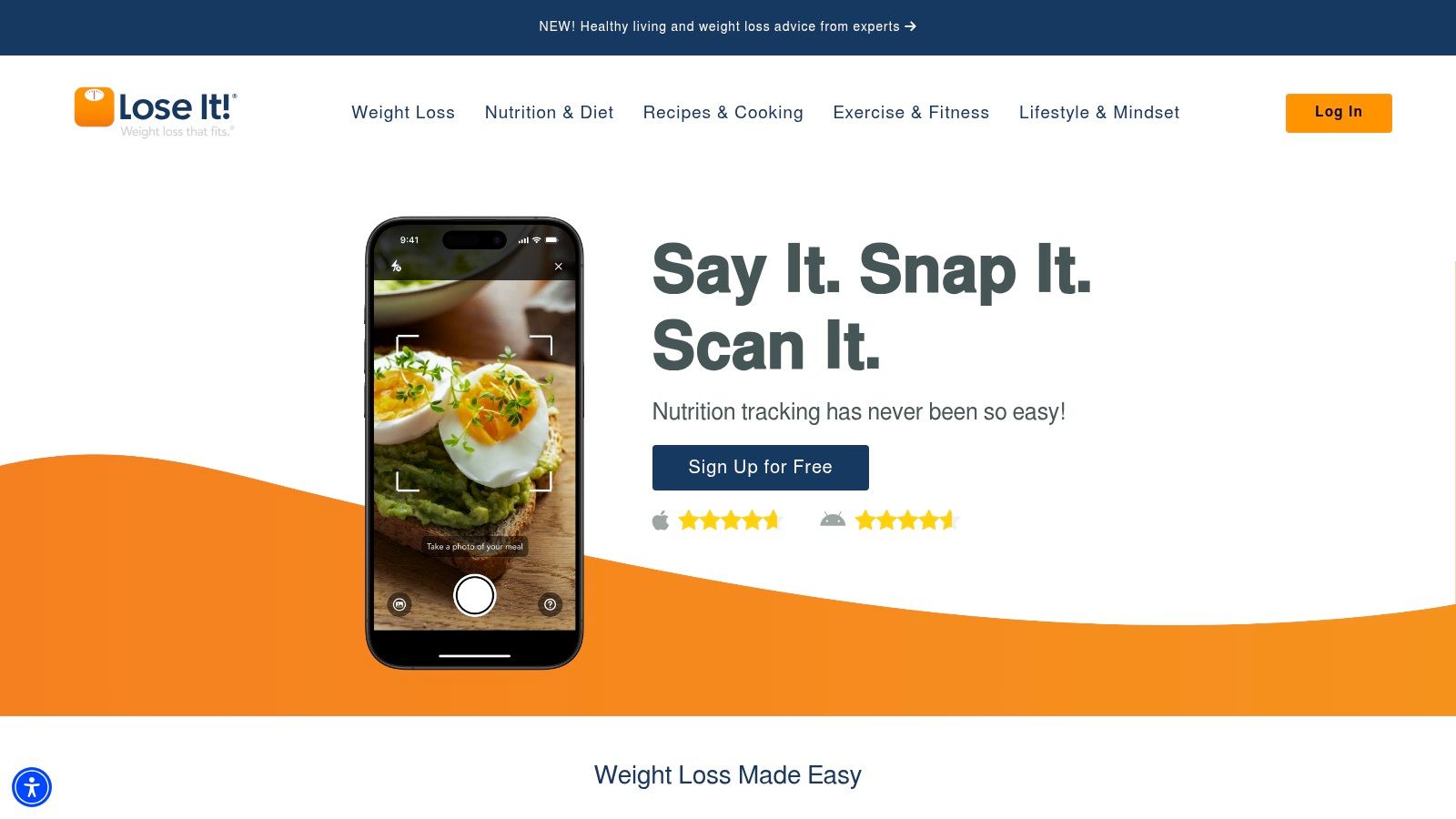
A person who wants to answer one question, whether the day's meals fit a calorie budget, should start with Lose It!. Its weight-loss-oriented approach centers on a personalized daily budget, food entry, activity, and weight tracking.
This is the clearest recommendation for simple calorie-budget logging. Progress charts and milestones add context without requiring the user to make detailed micronutrient analysis the center of the routine.
Free access covers basic food and weight logging. Premium adds custom nutrition goals, meal planning, device syncing, and photo and voice logging, so the subscription decision should depend on whether those additions remove a genuine obstacle.
A paid logging shortcut is worth considering when it replaces a task that repeatedly causes missed entries. A feature that merely looks appealing isn't the same thing.
Check the scanner before committing
Barcode access needs particular attention. Availability can vary as scanning moves into Premium, so a person who buys mostly packaged foods should confirm access in the actual account rather than assume it belongs to the free tier.
For someone preparing homemade meals, saved foods and repeatable entries may matter more than scanning. For someone logging supermarket lunches, the scanner could be central to the buying decision.
A separate meditation app isn't a food-tracking feature. Readers comparing broader wellness subscriptions can consult KeenVerdict's Headspace review, but should assess that expense separately from the food diary.
The main drawback: Lose It!'s straightforward free experience won't satisfy every custom-goal or convenience requirement. The practical recommendation is to establish whether basic entry feels sustainable before paying for more ways to log.
Plan status: Free and Premium. Current Premium pricing, promotional discounts, scanner eligibility, and renewal terms require vendor confirmation; no live price check is claimed.
3. Cronometer
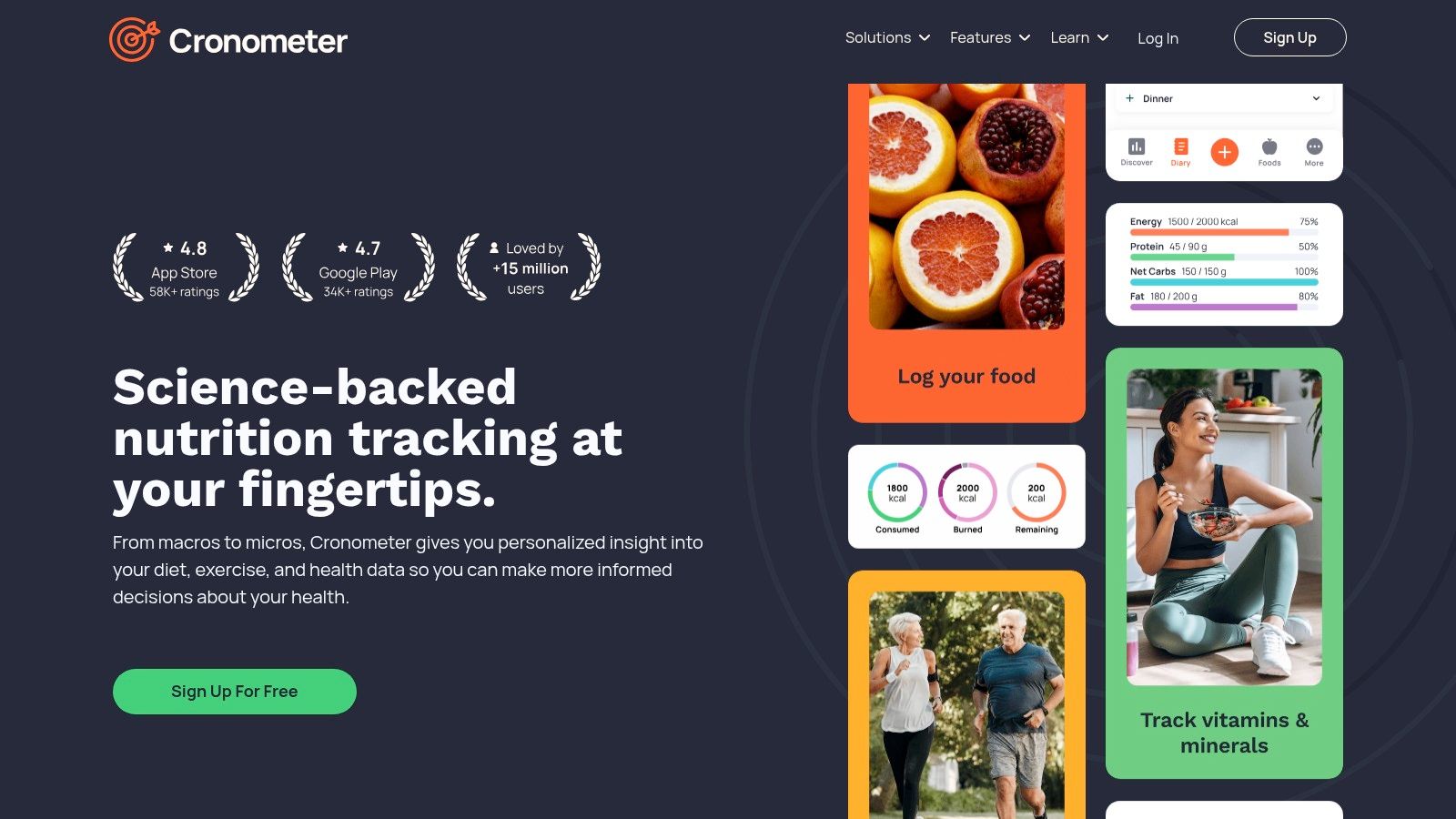
Choose Cronometer when nutrition quality matters alongside calorie intake. Its Basic tier supports detailed nutrient tracking, a barcode scanner, and custom foods and recipes. The database includes verified or lab-analyzed entries.
Cronometer earns its place through nutrient-focused logging, not a promise that extra charts automatically produce extra weight loss. Someone monitoring fiber, protein, and selected vitamins or minerals has a clearer reason to choose it than someone interested only in a daily calorie allowance.
Say a vegetarian regularly logs beans, yogurt, vegetables, and homemade dinners. Cronometer offers a way to examine the nutritional pattern of those meals rather than stopping at their energy total.
Basic versus Gold
Basic is the starting recommendation. Free barcode scanning and recipe creation cover useful everyday tasks, while weight, exercise, and health-metric tracking provide context around the food diary.
Gold adds recipe importing, fasting tools, extended charts, and an ad-free experience. Those additions serve distinct needs rather than making Basic unsuitable for ordinary tracking.
- For home cooks: Compare manual recipe creation with the convenience of recipe importing.
- For chart-focused users: Decide whether extended analysis will inform an actual food choice.
- For simplicity seekers: Keep only relevant nutrient views prominent instead of inspecting every available measurement.
The main compromise is attention cost. Detailed dashboards can become another obligation, particularly when foods have incomplete nutrient information or the user begins treating every target as equally important.
Cronometer is a strong free nutrient-tracking choice, but it shouldn't be called universally deeper than MyNetDiary merely because it emphasizes nutritional analysis. Supported fields and usable information for a particular food aren't the same thing.
Plan status: Basic and Gold. Gold's current price, billing period, and renewal amount need a dated vendor check before purchase.
4. MacroFactor
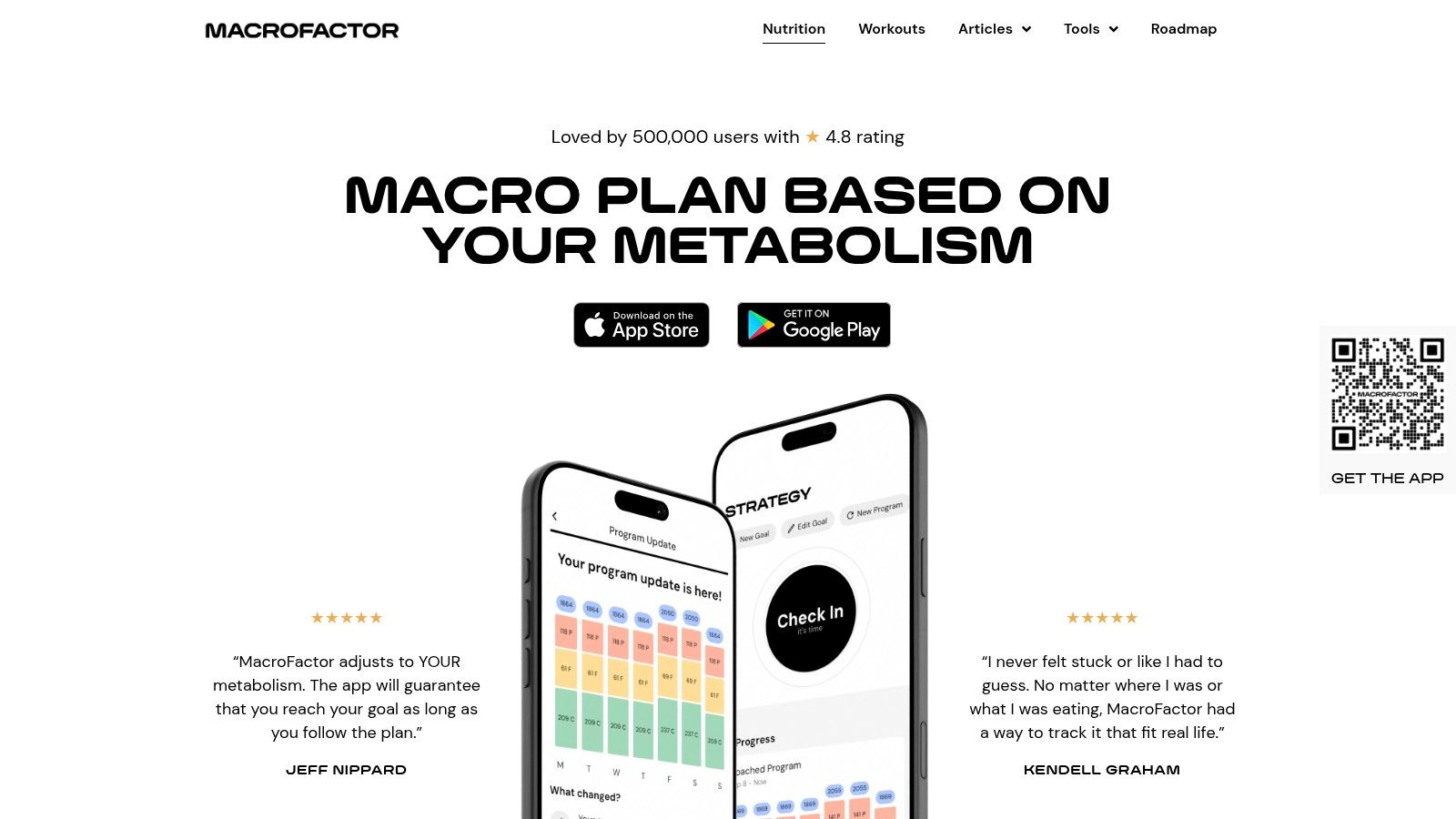
Adaptive targets are the reason to consider MacroFactor. The paid app combines food intake and weight records to estimate energy expenditure and adjust calorie and macro targets over time.
That makes it a better fit for an established logger than someone still deciding whether food tracking belongs in daily life. Its value depends on a willingness to record intake and weight consistently enough to support useful trend interpretation.
MacroFactor includes food logging, barcode scanning, custom foods, recipes, weight-trend views, and check-ins. The company describes the experience as ad-free, and a free trial allows prospective subscribers to evaluate the workflow before paying.
Adaptive doesn't mean automatic success
A 2025 systematic review in the Journal of Medical Internet Research combined 11 randomized controlled trials involving 1,717 participants and found a modest weight-loss benefit from smartphone interventions combining diet and exercise monitoring. That finding supports app-assisted self-monitoring, not a claim that MacroFactor or any particular commercial algorithm is superior.
The practical distinction is straightforward: an adaptive target can respond to logged trends, but it can't eliminate missing entries, uncertain portions, or the need to interpret results sensibly. More detailed feedback doesn't remove the underlying logging task.
Buying rule: MacroFactor makes sense when the user already accepts regular logging and wants help adjusting targets. It isn't the first purchase for someone whose main problem is remembering to enter lunch.
Its lack of a permanent free tier is the central value trade-off. Someone who needs only a calorie diary can begin elsewhere without committing to a subscription.
Plan status: Paid subscription with a free trial, no ongoing free plan. Current subscription amounts, available billing periods, and trial-conversion terms require confirmation on the vendor's checkout screen; no live pricing check is claimed.
5. MyFitnessPal
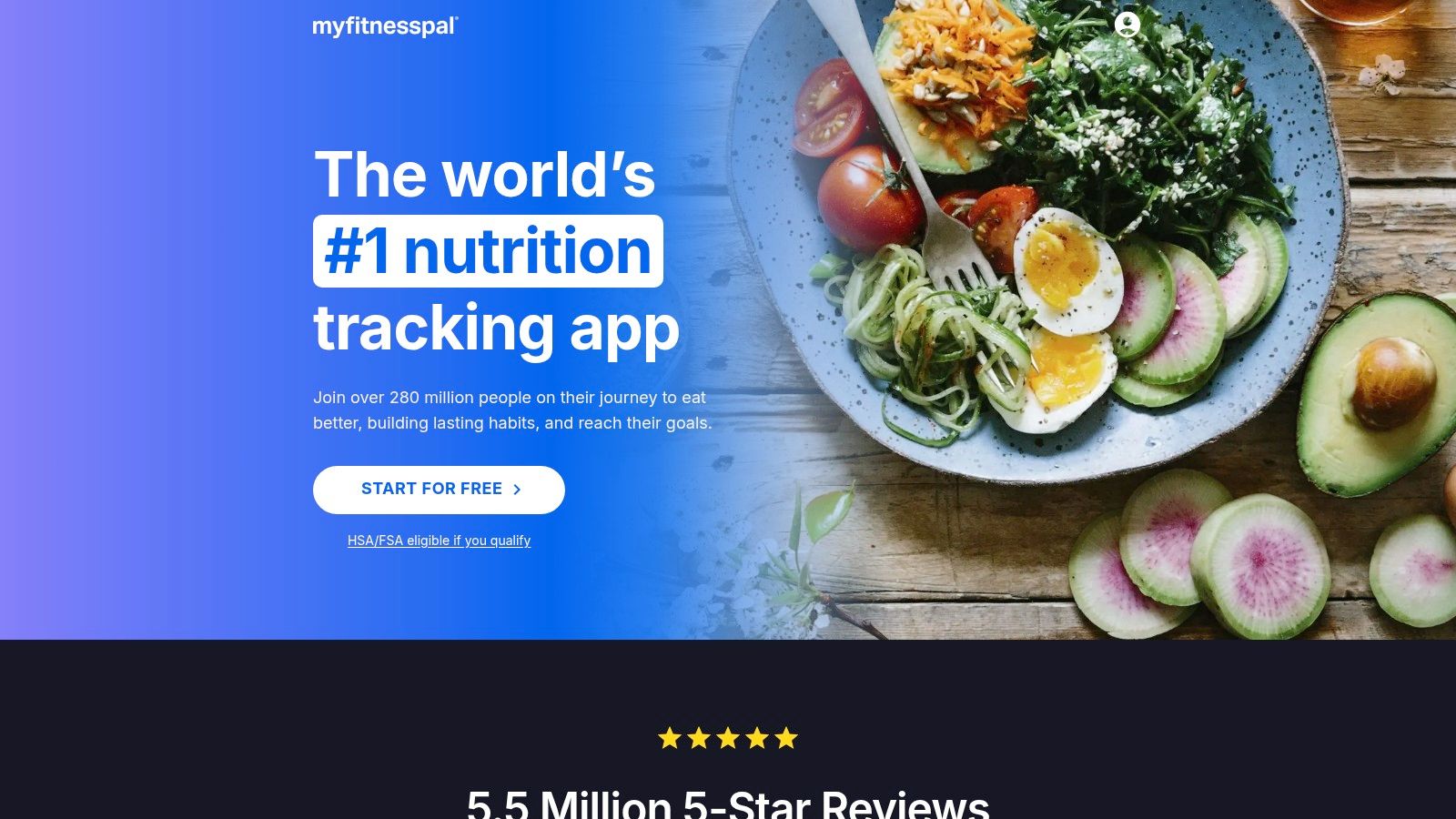
MyFitnessPal is the all-purpose diary on this list. Restaurant meals, packaged snacks, exercise records, and weight entries all sit in one place, alongside connections with other health apps. It suits people who want breadth over a narrowly nutrient-focused tool.
The free tier supports basic food and exercise logging. Premium adds barcode and meal-scan tools, faster logging options, and greater control over nutrition goals. Premium+ adds meal planning and grocery-list features.
The important distinction is between finding foods and trusting an entry. A broad catalog makes logging convenient, but an entry that matches the wrong serving size or unit distorts the day's totals. Users still need to compare portions and nutrition information against the food they ate.
Pick the plan around the logging task
For a person logging familiar meals by search, free access may be sufficient. For someone scanning packaged foods throughout the day, the Premium barcode paywall deserves attention before the app becomes part of the routine.
- Free: Appropriate for establishing whether manual food and exercise logging is sustainable.
- Premium: Relevant when scanning, faster entry, or more detailed goal controls solve an everyday problem.
- Premium+: Relevant when the missing piece is meal planning and grocery preparation, not just recording meals.
Popularity isn't evidence that a particular food diary fits an individual's routine. Readers who want broader context on app usage patterns can consult KeenVerdict's mobile app statistics alongside the tracker comparison.
MyFitnessPal's recommendation is conditional on workflow, not brand recognition. It remains a sensible free starting point for general logging, especially when its connected-app approach matches existing habits. Cronometer or MyNetDiary deserves preference when detailed free nutrient tracking is the main requirement.
Plan status: Free, Premium, and Premium+. Current paid-tier prices, billing periods, regional availability, and renewal charges require vendor confirmation; no dated live price verification is available.
6. Noom
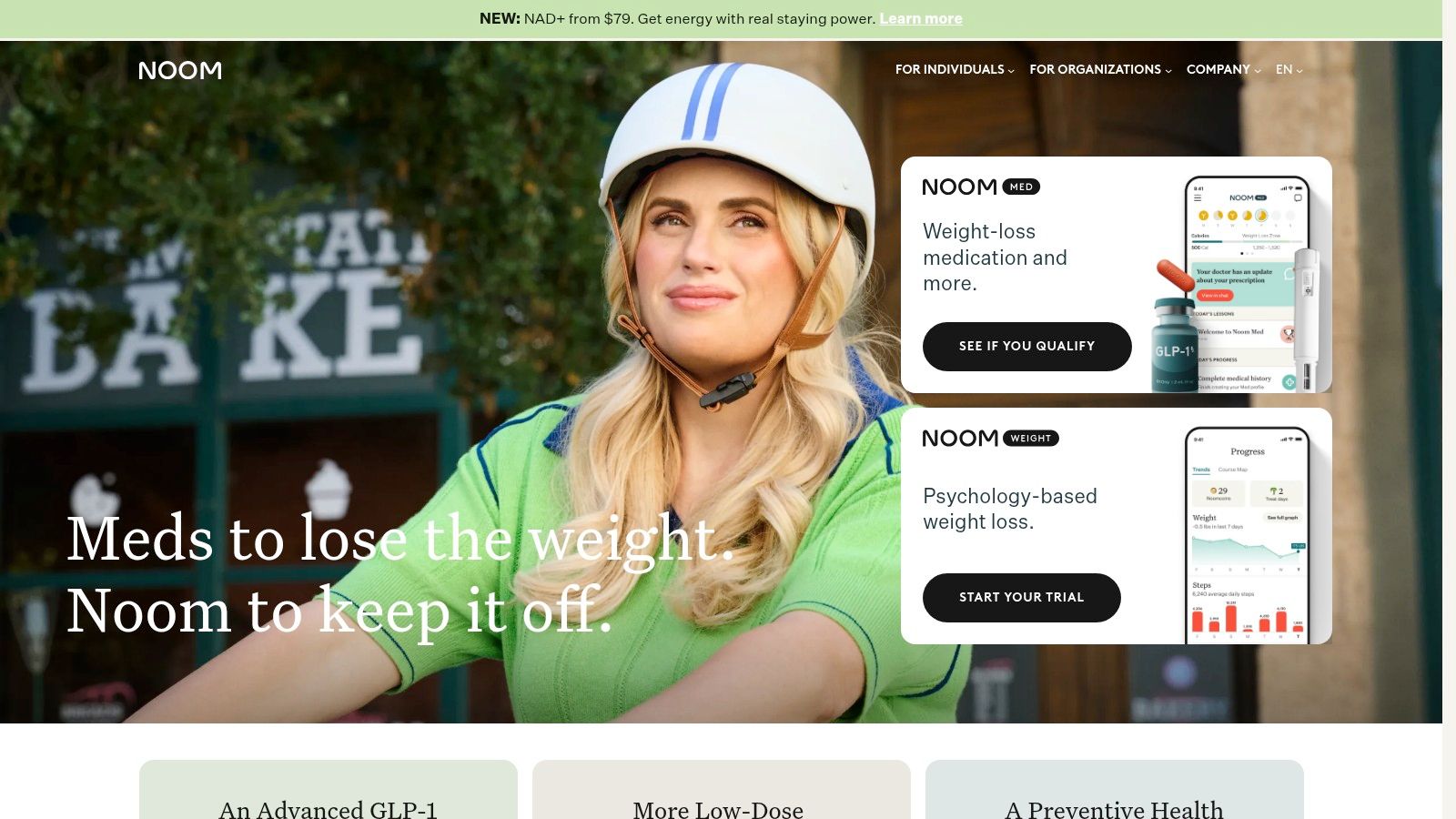
Noom belongs on the shortlist when a food diary alone isn't enough structure. Noom Weight combines meal logging and a calorie range with lessons, habit-focused content, interactive challenges, and community features.
The buying question isn't whether Noom records food. It is whether the person will use the learning and behavior-change program alongside that diary.
Someone who repeatedly downloads calorie counters but never establishes a routine may prefer a program that supplies daily material and a defined process. Someone already comfortable planning meals and logging intake may pay for content they don't need.
Pay for guidance only when it gets used
Noom's program structure should be evaluated separately from logging convenience. A useful assessment includes whether lessons feel relevant, whether guidance fits the person's needs, and whether participation remains manageable during busy periods.
A guided program is a different purchase from a food diary. Its additional cost needs to buy support that the member actually uses.
Billing terms are part of the comparison. Noom Weight plans may bill upfront and automatically renew unless canceled, so an advertised monthly equivalent shouldn't be mistaken for a month-to-month commitment.
Medication isn't included with Noom Weight. Optional medical services are separate, and standard food-tracking access shouldn't be confused with medical assessment or treatment.
Readers exploring related subscriptions can compare the wider health and wellness category, while keeping each service's purpose and total cost separate.
The verdict: Choose Noom for structured lessons and habit support, not for inexpensive calorie logging. A standalone free diary is the better starting point when recording meals is the only requirement.
Plan status: Paid Noom Weight programs with different durations; trial availability can vary. Current total charges, renewal dates, cancellation conditions, and optional medical-service costs need confirmation before enrollment.
7. WeightWatchers
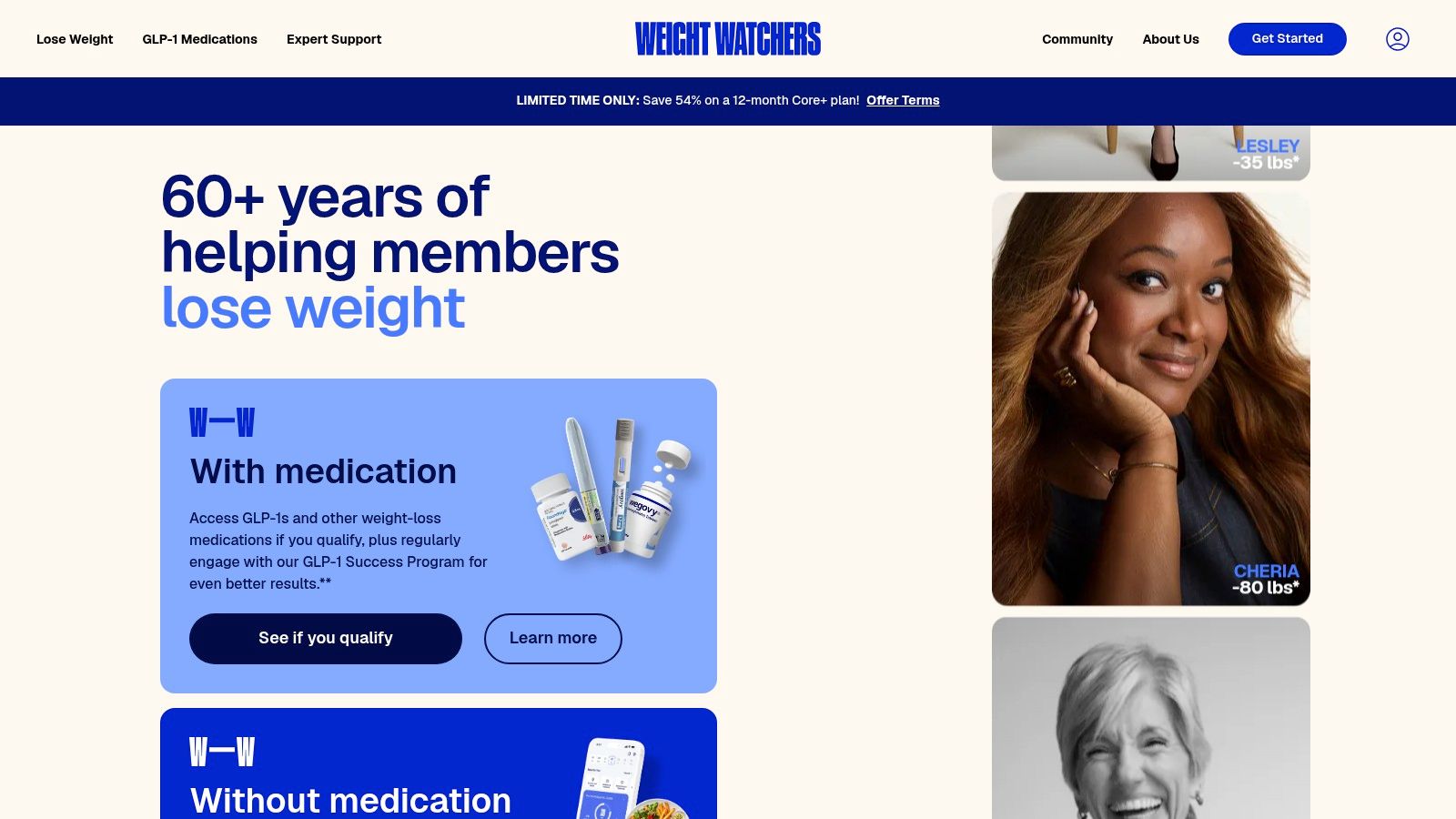
Points rather than calorie arithmetic distinguish WeightWatchers. Its app combines a Points-based food program with food and weight tracking, recipes, activity features, macro tracking, and a members-only social network.
This is the recommendation for someone who prefers a guided food-choice framework and community over an open-ended calorie diary. Higher-support plans can add coaching or workshops, depending on the offering.
The trade-off is interpretability. A Points allowance gives members a program-specific way to make choices, but it isn't the same as directly comparing the calories and nutrients in every food.
Compare the support, then the commitment
A useful comparison starts with the member's actual needs:
- Food framework: Points should feel more usable than direct calorie counting.
- Community: Member interaction should be something the person intends to use, not merely an attractive extra.
- Added support: Coaching or workshops should address a need that the app alone doesn't meet.
Core and Core+ need comparison on total commitment, not just an advertised starting rate. Promotional offers can require a longer subscription, and automatic renewal can change the eventual cost.
Separate medical offerings aren't required for the standard program. Their services and charges should remain outside a basic food-tracking comparison unless the prospective member specifically wants clinical care.
WeightWatchers fits someone who welcomes program rules and shared participation. It is less suitable for someone who wants a free diary, direct nutritional accounting, or complete independence from a prescribed framework.
Plan status: Paid program tiers, including Core and Core+ where offered. Current introductory prices, commitment length, renewal amounts, and included support require a dated vendor check; no live quote is asserted.
For this option, ease of following the Points system should outweigh the sheer length of the feature list.
How the seven food tracking apps compare on free access, paid entry price and best use
Pick the row whose free access already covers your daily logging, then judge paid entry by billing model and commitment rather than a headline rate. The comparison weights features at 40%, ease of use at 30% and value at 30%, so a lower price loses ground if it adds friction to every entry.
| Item | Free access | Paid entry to compare | Best use |
|---|---|---|---|
| MyNetDiary | Free calorie, macro and nutrient tracking | Optional paid upgrade | Detailed nutrition tracking without paying upfront |
| Lose It! | Basic food, activity and weight tracking | Premium upgrade | Simple calorie-budget-based weight tracking |
| Cronometer | Basic tracking, barcode scanning and broad nutrient reporting | Gold upgrade | Tracking vitamins, minerals and other nutrients |
| MacroFactor | Free trial; no ongoing free tier | Subscription after the trial | Adaptive calorie and macro targets based on logged trends |
| MyFitnessPal | Basic food and exercise logging | Premium upgrade | Broad food database and general-purpose tracking |
| Noom | Trial may be available; paid program | Monthly program entry | Guided weight management with lessons and habit support |
| WeightWatchers | Program-led access rather than a free diary | Core plan with a stated commitment | Points-based tracking with community and structured support |
Read paid entry as the least expensive route to the named benefit, not as a guarantee of the final bill. Introductory offers, renewal amounts and commitment length can move the total, so the cheapest advertised tier fits only when the support behind it matches the habit you will repeat.
Choose the Tracker That Fits Your Logging Habit
For free core logging and a clear calorie budget, start with Lose It! or MyFitnessPal. Lose It! is the direct choice for a budget-centered routine; MyFitnessPal suits broader food and exercise logging. Scanner access should be checked before either becomes the default for packaged-food entry.
For nutrient depth without an immediate subscription, choose Cronometer or MyNetDiary. The deciding question is whether the person will use nutritional detail to make food choices. Neither becomes a better fit merely because it displays more information.
Match the purchase to the missing support
MacroFactor suits consistent loggers who want responsive targets. Its trial should establish whether the food-entry process and weight-trend feedback justify an ongoing subscription. It shouldn't be purchased on the assumption that an algorithm will create a logging habit.
Noom and WeightWatchers suit people seeking a program. Noom emphasizes lessons and habits; WeightWatchers emphasizes Points and member participation. Their value depends on using those structures, with total cost and renewal conditions assessed before enrollment.
The broader lesson is to judge repeatable behavior, not perfect record-keeping. A 2025 systematic review available through PubMed Central found substantial variation across app-based weight-management interventions, which argues against treating a long feature list as a guarantee of results.
- Set the budget: Record an affordable monthly amount and an acceptable upfront commitment.
- Verify the offer: Save the vendor's plan name, total price, billing period, renewal terms, and the date checked.
- Try the routine: Use the free tier for two weeks, or assess a paid-only app within its actual trial window.
- Make the decision: Upgrade only when a specific paid feature would remove a recurring obstacle; cancel when the service isn't being used.
A missed day should lead to the next meal entry, not an abandoned account. If logging encourages anxiety, rigid restriction, or distress around food, a healthcare professional or registered dietitian is a better next step than another subscription.
The next step is a small, concrete comparison: select Lose It! for simple budgeting or Cronometer for nutrient detail, record the budget and vendor-check date, and begin with ordinary meals. Keep the app that remains useful during a busy week, and pay only for the feature or support that makes continued logging easier.
Questions or corrections: editorial@keenverdict.com